When you can start, and what counts as exercise
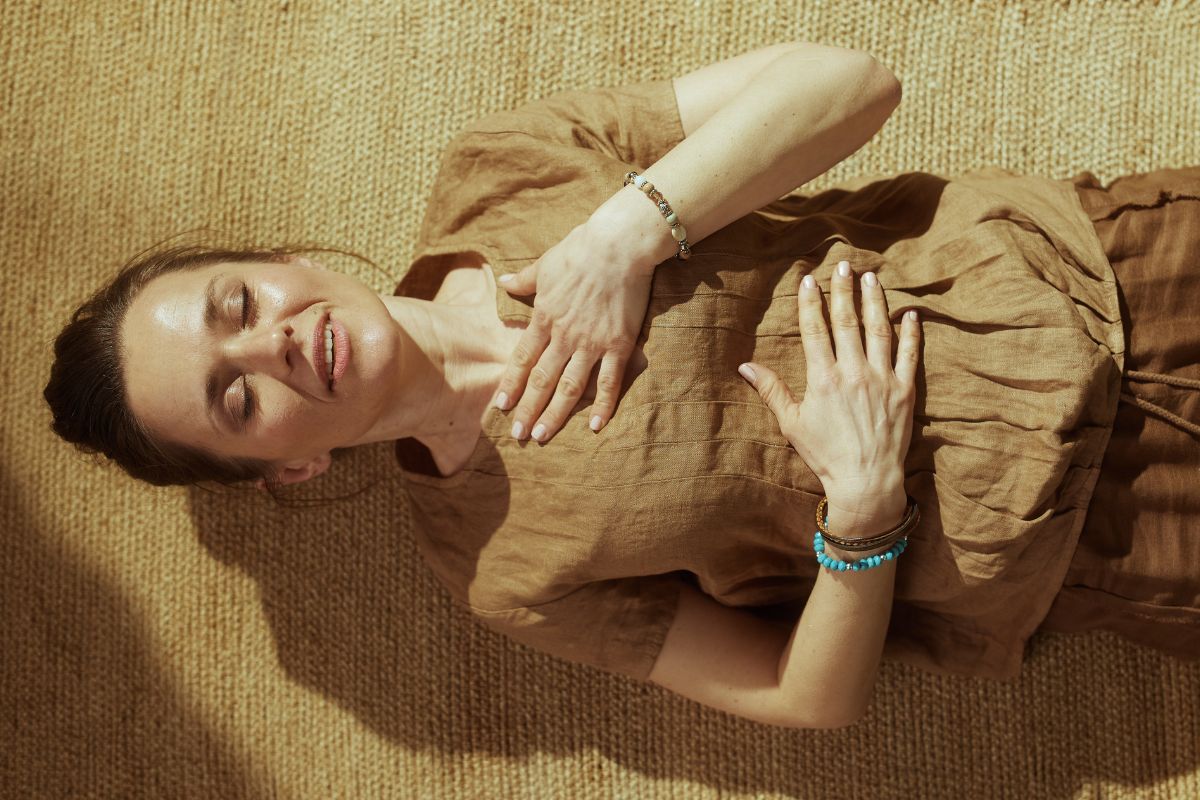
“When can I exercise after giving birth,” is a common question with a simple answer. You can exercise on day one after giving birth. What changes in this context is the definition of exercise. Diaphragmatic breathing is an exercise. Lying flat after a cesarean is an exercise. Breathing a particular way on the toilet is an exercise. Rolling and breathing your way in and out of bed is an exercise. All of those are safe to start immediately.
What most women are asking is when they can go back to formal exercise, and that is a different question with a longer answer. Working your pelvic floor and core on purpose, maybe around two weeks. Putting load on the system, lifting weights, closer to six.
Here is the part that gets lost. We scare women into doing nothing for six weeks, then hand them no guidelines for what comes after. Meanwhile, you are picking up your baby, lifting the car seat, getting in and out of bed, driving, going to the bathroom, making dinner, and doing the grocery run.
Your body is already working. Postpartum recovery means supporting the reality of your life in those weeks rather than pretending it is on pause.
We do not need to wait six weeks doing nothing, and we do not start full-out at six weeks. We start building at six weeks on a really strong foundation.
Five things you can safely start in the first days
This is what my coaches and I give a woman who is a few days postpartum and wants to start. It works after a vaginal birth or a cesarean. The numbers below are examples of what this can look like, not targets to hit, because how you do each one matters more than how many you do.
Diaphragmatic breathing
Breathe so your rib cage expands in all directions, or think of breathing into the mid-back, the space between your shoulder blades. Your diaphragm is the big muscle lining the bottom of your rib cage. As it pulls down on the inhale, your pelvic floor relaxes with it, because the two are connected. As it recoils, it gently lifts your pelvic floor back up.
What it does: improves pelvic floor mobility, movement through the rib cage, and blood flow to healing tissue. It also activates your vagus nerve, which helps move you into a rest-and-digest state rather than the stress response most of us get stuck in after birth.
What to notice: Your back and sides expanding, not just your belly rising. You can do this while you nurse, lying in bed, anywhere at all.
Shoulder blade squeezes and chin tucks
After you feed, squeeze your shoulder blades down and back. Then pull your ears back over your shoulders and tuck your chin. For example, ten of each, during or after feeding.
Why it matters: It works against the rounded shoulder position of nursing and of holding a baby all day, which is most of your day right now.
The book opening stretch
Lie on your side with both arms stretched out in front of you. Take your top arm and reach it up toward the ceiling, then over toward the wall behind you, letting your chest open as it travels.
Why it matters: This builds rotation through the rib cage and mobility through the upper back, which supports your posture. It also opens the space in front of your shoulders, which may support blood flow and milk flow.
Lying flat, if you had a cesarean
Lie completely flat. Not propped up like a taco, not half sitting with your legs elevated. Flat. Do it a few minutes at a time, a few times a day, and you can do it while nursing or on your own.
Why it matters: It helps your cesarean scar lie down flat, and it helps fluid drain through your belly and groin.
Exhale to exert
Breathe out as you do the hard part. Lifting the car seat, standing up with the baby, getting out of bed.
What goes wrong: Holding your breath. When you hold it and then lift, you drive pressure down onto the systems that are healing: your pelvic floor, your low back, and your core. Exhaling sends that pressure somewhere safe instead.
If you just exhale, you take all the pressure off the systems that are healing, and you do yourself a world of good.
What is right for you also depends on how your birth went, what you were doing before and during pregnancy, how you feel physically and emotionally, and what your days actually have room for. That is why Hearth Healing coaching is customized education rather than a program. Learn how coaching works.
How to tell it is going well, and when you are ready for more
Three signs tell you that you are doing too much, and they are the same three at every stage: leaking, pain, and increased bleeding. If any of them show up, that is not a verdict on your body. It is information, and it means backing off and rebuilding rather than pushing through.
Readiness for weight, impact, or running is not a date. The first question my coaches and I ask a woman who wants to run again is what she has done to get ready to run. If the answer is that she went for a run, that is where the leaking came from, and the work is to build the foundation first.
That foundation is ordinary and unglamorous. What does a single-leg squat look like? A double-leg squat? A squat with load? How are your knees supporting you? How are your hips? What is your pelvic stability doing?
You are ready to add a new layer when you can do the foundational movements with a really solid pelvis: not a lot of pelvic drop or rotation, no leaking, and no pain. If you can do them without weight, without impact, and without jumping, your body is telling you it can take more.
Common questions about exercising after birth
Day one, if you count breathing, gentle postural work, and lying flat after a cesarean as exercise, which they are. Purposeful pelvic floor and core work usually starts around two weeks. Loaded strength work usually starts closer to six weeks, built on whatever foundation you laid before that point rather than from nothing.
It depends on what you are doing. At three weeks, it is fine if the work helps your pelvic floor and core reconnect, if you are paying attention to the timing of your breath and your pelvic floor, and if you are managing pressure well. Leaking, pain, or increased bleeding are signs you are doing too much and need to back out.
Nothing catastrophic happens. You may notice increased bleeding, urinary leakage, or more pain. Those things do not tend to resolve on their own, though. They improve with the right exercises at the right phase of healing, when your body is actually ready for them, which is why the order matters more than the start date.
At three weeks postpartum, my coaches and I would not have you running or lifting weights. We would have you doing the work that rebuilds muscle memory, motor control, and timing, so your muscles learn to support your spine and your body again. That said, some clients are lifting at six weeks, and others are still doing breathing work. It depends on you, your body, and your unique circumstances.
Yes, and simple work at one month is encouraged. The part worth getting right is the guidance. Ideally, someone experienced who can tailor it to your body and your readiness, and ideally you understand why you are doing each thing rather than following a set of movements you came across at random.
If you want help working out what applies to your body rather than a general list, start your application. It helps us understand what happened, what still feels off, what support you’ve already had, and what your body may be asking for next. From there, we’ll point you to the support that best fits your goals and situation.